
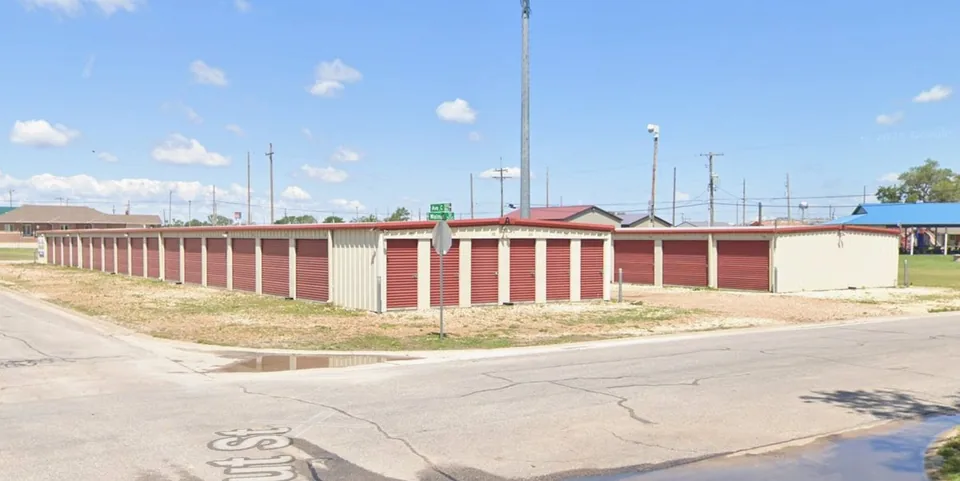
Almost nobody wakes up wanting a storage unit. It's not a purchase people look forward to — it's something you end up needing because a house sold faster than expected, or a parent moved into assisted living, or the garage stopped being a garage sometime around 2019.
We rent units at four locations around Hutchinson, and after enough move-in conversations you start to notice the same handful of situations come up again and again. So here they are — the times renting a unit genuinely solves something. And, because we'd rather you not pay us for a year to avoid a decision, the times it doesn't.
The seven situations we see most
1. There's a gap between closing dates
This is the single most common reason people call us. You're out of the old house on the 15th and into the new one on the 30th, and there is no version of that where the couch just floats. A month-to-month unit covers the gap without you having to negotiate a rent-back or live out of a moving truck.
What makes this one easy: it has a clear end date. You know going in that you're renting for four to six weeks, and you can size the unit for a whole household rather than trying to be clever about it.
2. A parent is downsizing — and nobody's ready to decide yet
A house that's been lived in for forty years does not sort itself out in a weekend. When someone moves into a smaller place or into assisted living, families often need somewhere to put everything while they work out what's keepsake, what's going to grandchildren, and what's going to auction.
This is legitimately the right use of a unit, and it's worth being honest that it usually runs longer than families expect — three to six months is typical, not three weeks. Budget for that up front and it's much less stressful.
3. You're renovating and the furniture has nowhere to go
Contractors work faster in an empty room, and drywall dust gets into everything. Pulling the contents of two or three rooms out of the house entirely is usually cheaper than the alternative — shuffling furniture between rooms as the crew moves through, and paying for the delays that causes.
We wrote a whole piece on this one: Self Storage During a Home Renovation.
4. The seasonal stuff has taken the garage hostage
Very Kansas, this one. The boat is in the garage nine months a year. The side-by-side and the hunting gear are stacked around it. The mower comes out in April and the snowblower goes in around October, and somewhere under all of it there's a parking space nobody has seen since the kids were little.
A 5×10 or 10×10 for the off-season equipment is frequently cheaper than people assume, and it gives you a garage back. Our drive-up units at South Hutchinson, Buhler, and Haven are built for exactly this — you pull up to the door and load straight in, no hallways or elevators.
5. A small business outgrew its back room
Contractors storing tools and materials between jobs. Online sellers with inventory that used to fit in a spare bedroom. Trades that need a secure place for equipment that shouldn't live in a truck bed overnight. A unit is dramatically cheaper than the next size up in commercial lease space, and month-to-month means you're not committed if the business shifts.
6. Someone's deployed, traveling, or away for a season
Military assignments, travel nursing contracts, a job that's six months in another state. Paying rent on an apartment you're not living in to protect furniture is a bad trade. A unit for the duration costs a fraction of that.
7. College is out for the summer
Hauling a dorm room home to Wichita or Kansas City in May and back again in August is two trips nobody enjoys. Storing it three miles from campus is usually cheaper than the gas, and infinitely cheaper than replacing what got damaged in transit. More detail here: A Student's Guide to Storage at Hutchinson Community College.
And three times it isn't the answer
We'd rather tell you this now than have you figure it out eleven months into a rental.
When the real problem is that you need to get rid of things
If you look at a pile and your honest reaction is "I don't want any of this, I just don't want to deal with it," a storage unit will not fix that. It converts a one-weekend problem into a recurring monthly bill, and the pile is still there when you finally face it — only now it's been in a box for two years.
A rough test: imagine paying to store it for three years. If nothing in the pile is worth what that costs, the answer is a donation run and a dumpster, not a unit.
When it's a handful of boxes
Four or five boxes of paperwork and photos is a closet shelf, not a rental. Even our smallest unit is more space than that needs, and you'll spend more driving over to retrieve things than the convenience is worth.
When you haven't checked what your insurance already covers
Not a reason to skip a unit, but worth doing first. Some homeowners and renters policies extend limited coverage to belongings stored off-premises, and some don't cover them at all. Find out which you have before you decide what's going in. Our tenant protection page explains how coverage works on stored items and where the gaps usually are.
If you've decided it's time
Two things worth sorting out before you reserve anything.
Size it honestly. The most common regret at move-in is a unit that's slightly too small, and moving from one unit to a bigger one is a whole extra Saturday. Our guide to choosing the right storage unit size walks through what actually fits in each one.
Decide whether it needs climate control. Kansas swings from humid to sub-zero and back. Anything wood, leather, electronic, or sentimental generally wants a stable temperature; a lawnmower does not care. Our Hutchinson location on N Plum Street has climate-controlled units; the other three are drive-up. Here's how to tell which one you need.
Everything we rent is month-to-month. There's no annual contract, no fee to leave, and we'll walk you out to see the actual unit before you sign anything — if it looks wrong when you're standing in front of it, we'll switch you to whatever else is open.